
It is well documented that the mining/resources industry is the bedrock of the Australian economy contributing approximately 10% of GDP but approximately 59% of all exports.
However, there is a shift coming in the form of new equipment suppliers and AI enabled ways of working that could have impacts on lenders, suppliers, employees and local communities.
Changing of the Guard – The Influx of Chinese Machines
A recent article by Gordon Brothers (https://lnkd.in/p/gSbnQ-Qd) highlights the increase in Chinese manufactured mining equipment, prompting consideration of the impacts not just on the mining sector, but the wider community.
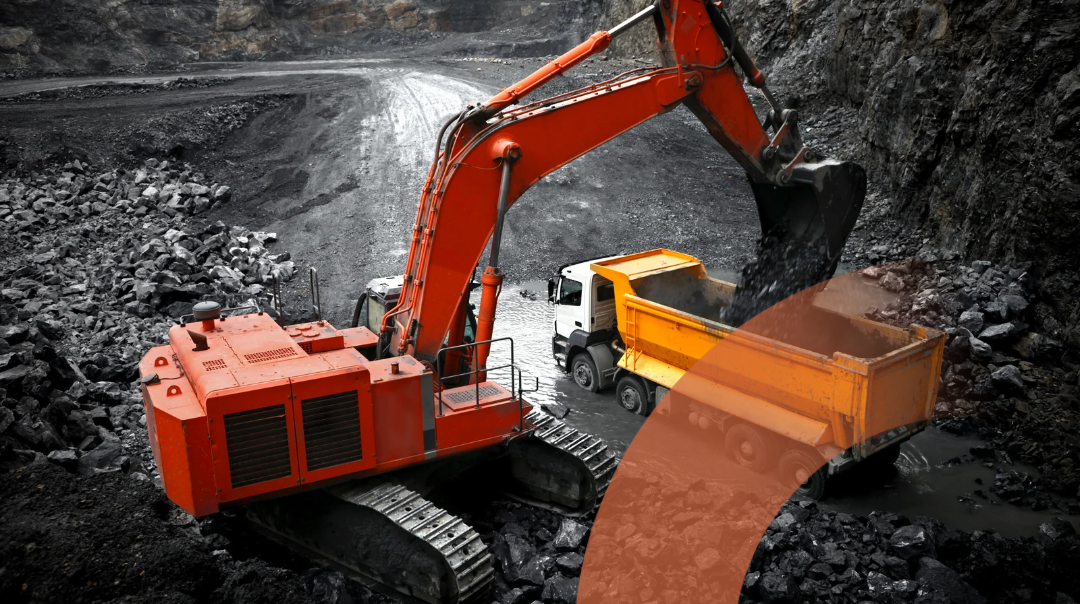
Mining equipment providers have long been the preserve of a few providers in the form of Caterpillar, Komatsu, Liebherr and Hitachi and these vehicles have been typically fuelled by diesel. These brands have offered reliability, a local network for servicing and attractive residual values. However, as with most other things (EV motor vehicles in particular), Chinese alternatives are beginning to catch up and eat into market share. The article cites an increase in electric mining trucks from 350 units in 2021 to over 6,000 deployed in 2025. Names such as XCMG, SANY, Tonly and Yutong have entered the market and at a price point that undercuts the legacy providers, but the offer is a little different.
The number of new, mainly Chinese, car brands now being sold in Australia has grown markedly in recent years. BYD is now a firmly established brand in Australia (as it is in the UK) and where it has blazed a path, others have followed. It wasn’t too long ago (2012) that the Top Gear presenters mocked the copycat cars that were being produced.
In Shanghai, a city home to 25 million people, an estimated 95% of vehicles are EVs, with reportedly around 120 different brands on offer. This will undoubtedly lead to consolidation at some stage, but it will also drive each supplier to provide better products, particularly with respect to reliability and longevity, two very important attributes required for vehicles operating in the mining industry.
Some of the key attributes of these machines are:
- Global Core Component Integration – to alleviate concerns with reliability, Western and global sub-components are integrated such as Cummins or MTU engines, Parker/Bosch hydraulics and Siemens or GE electric drives.
- Intelligent & Autonomous Systems – 5G and cloud-based coordination, remote control, smart sensing and driverless or AGV (automated guided vehicle) haulage systems.
- Cost Competitiveness and Scale – Backed by massive industrial scale, Chinese suppliers can manufacture at a fraction of the cost of the incumbents.
- Rapid Electrification & Alternative Powertrains – although ICE continue to dominate the market, battery-electric vehicles (BEVs) and zero-emission programs are expanding to meet net zero standards. As with the EVs on the road in Shanghai, the preferred charging method is a swap out of the battery, which can take less than 10 minutes, minimising downtime. It may however be difficult to adopt BEVs at remote sites, where charging is challenging. This also represents an opportunity if there can be an adoption of solar at sites, which may further reduce the costs of mining and the lessens the impacts on fuel prices from external shocks, such as the conflict in the Middle-East. Indeed, this could accelerate adoption.
- Trade-offs in Longevity and Resale – The initial purchase price of Chinese equipment is often cheaper than traditional competitors, but face quicker depreciation, shorter lifespans (contingent on the application) and lower residual values.
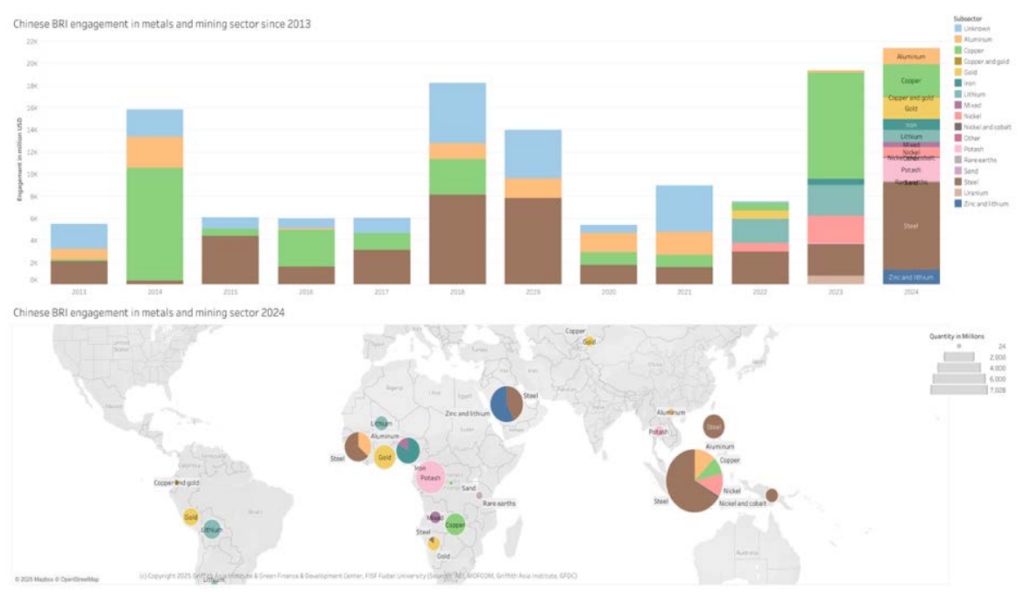
The Belts and Roads initiative has provided the Chinese Government with opportunities to grow its influence around the globe and in particular in resource rich countries in Central Asia, Africa and Latin America China’s foreign mining investment sets record – MINING.COM. This also opens up the ability to service those markets with Chinese manufactured mining equipment. If these companies can service other countries, why not Australia?
This raises a natural question for Australian mining and mining services companies: why pay a premium for a new Caterpillar when a Chinese machine can be bought for a fraction of the price?
The current impediments facing the buying decisions are:
- If it breaks down, is there sufficient aftermarket servicing available and therefore, what are the downtime risks?
- What, if anything, is residual value of the machine?
With respect to the first point, machine reliability and quality will ultimately improve (as it has in the EV market) and the risk of breakdowns will reduce, but also as the market grows, the aftermarket service network will need to follow to support initial sales. However, as mentioned above, Chinese manufacturers are mitigating any negative perceptions through the integration of tried and tested third-party produced components.
The EV inspired model of offering the equipment at a significantly discounted price when compared to equivalent models, negates the reliance on residual values. From an insolvency perspective, realisations for creditors from any perceived equity in the “yellow gear” will become more challenging. Lenders will also need to consider whether they need any additional security, knowing that the underlying asset may not be worth much after it leaves the forecourt.
However, is the impact of cheaper machines already having an impact on incumbent suppliers. Komatsu has recently announced that it will be shedding 265 jobs at its Moss Vale plant by 2030, citing a simplification in operations in response to “changes in the Australian market and consumer requirements.” Time will tell, whether further retrenchments will occur.
AI and AGVs and their Impact
AI seems to be in every other conversation at the moment and the mining industry is no exception. According to the Mind the Bridge Report Mining meets AI: $900M market, 74% led by Australia, Australian dominates the investment (74% of the total global investment) in AI technologies to support the industry.
Key Benefits of AI and AGVs are:
Exploration & Discovery – AI models are being used to cut down target-generation time and discover critical minerals such as copper, lithium and other rare earths. All critical components in the electrification of the country.
Autonomous Haulage & Logistics – Self-driving vehicles are already deployed across the mining industry and can cut fuel use by 10-15%, whilst boosting productivity by 15% to 30%. AI in Mining: Top Use Cases You Need To Know.
Predictive Maintenance – Real time sensor data and machine learning predict equipment wear and component failures, reducing the risk of unscheduled maintenance.
Safety – Mining is inherently dangerous. The adoption of AGVs significantly mitigates the risk to workers.
Challenges of Adoption
Greater Susceptibility to Cybersecurity Risks or Viruses
The recent spate of cybersecurity hacks (Binance, French supermarket fridges) together with the recent outage of Microsoft shows how susceptible the world is to new technology. The everyday impact of a lag in home broadband is familiar to most households. As mining sites are generally remote, a reliable connection is key to the technology working. Given the importance of mining to the Australian economy, further adoption does represent an increased risk to the industry over traditional analogue mining methods.
High Initial Capital Requirements
Adoption of new technology will come at a cost and the benefits should be fully investigated to understand what can actually be achieved, in terms of savings/increases in productivity.
Training
The existing and new mining workforce will need to be trained on the new technologies being adopted and employee turnover in the industry is already high.
Be Careful What You Wish For – The Unforeseen Costs
The remoteness of mining in Australian mineral deposits has led to the FIFO culture developing in Australia. With a shift to a more capital-intensive model, the knock-on effect will be a reduction in the number of mining employees required to operate mines. What about the knock-on effects to the service providers to the industry, such as the airlines supporting the constant turnaround of FIFO workers that will see passenger numbers fall, the rental of dongas at mining camps and even the frequency of visits to the local pub for a feed and a drink after a long hard hot day. There could also be an impact on real estate values in the surrounding local communities, as operator numbers fall.
Conclusion1
The adoption of new technology and the entrance of new suppliers could see a significant shift in the economic, social and cultural structure of the mining industry.
Implemented correctly, there are clearly massive benefits that could be derived from upgrading the fleet and adopting AI, but there are also downside risks, such as no secondary market for equipment, cybersecurity concerns, but also job losses and effects on communities servicing the sector and the social impact this will have on society.
- This publication is intended as general commentary only and does not constitute legal or financial advice. Liability limited by a scheme approved under Professional Standards Legislation. ↩︎