

Note: Cathro & Partners is hosting a webinar on Wednesday, 10th May to investigate what the data is telling us about the consumer goods retailing industry in Australia, what we can learn from businesses doing well and the key financial metrics to watch.
Australia’s retail industry is facing a very uncertain 2023 as the impact of higher interest rates, inflation, supply chain issues and cost of living pressures are likely to see consumers reduce their spending particularly on discretionary items. The implications of a rocky retailing sector are significant given consumer goods retailing is a significant contributor to the country’s economy, generating approximately 4.1% of GDP and employing over 1.2 million people.
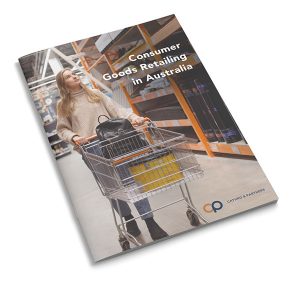
To understand the forces at play, Cathro & Partners has taken a deep dive into the consumer goods market in Australia in its latest whitepaper, “Consumer Goods Retailing in Australia”.
Our Managing Principal, Simon Cathro, notes that:
“Having run financially distressed businesses and seeing the need to restructure, often with a downsizing of the business, we expect businesses that have poor management, failing product lines and low discipline to suffer the most during 2023.
A reduction in discretionary spending by the typical consumer will cause greater competition for a smaller pool of available money. Consumers will look for quality, customer service and value for money and are most likely to take longer to make purchase decisions.
The businesses that rely heavily on spontaneous or casual spending are more likely to suffer the most as consumers resist the urge to waste money.”
To download a copy of the paper, please click the link here.
Extract from the whitepaper:
Like many other countries, Australia’s retail industry has been significantly impacted by the COVID-19 pandemic, which has caused disruptions in supply chains, consumer behavior, and the overall economy.
The pandemic has accelerated the shift towards online shopping, which has been a growing trend in Australia for some time. The increased demand for e-commerce has led to significant growth in online retail, with more retailers expanding their digital capabilities to meet consumer needs…
We are also hosting a webinar with on consumer goods retailing. You may register for a webinar using the link – Registration (gotowebinar.com)